

Why a Founder’s Time Audit Matters More Than You Think
Founder’s Time Audit. It sounds simple, but it might be the most powerful growth tool you’ve never used. At its core, a time audit is about tracking where every hour of your day actually goes, and for business founders, the results can be both eye-opening and uncomfortable.
When you’re scaling a company, it feels like you’re doing everything: sales calls, supplier negotiations, marketing brainstorms, late-night customer emails. But here’s the harsh truth, most of that busyness doesn’t translate into growth. Studies and founder surveys show that entrepreneurs often lose 30-40% of their day to tasks that could be delegated, automated, or eliminated altogether.
A time audit doesn’t just highlight inefficiencies; it forces you to confront whether you’re spending your energy as a CEO or as an employee in your own business. Done right, it’s not about shaming how you work, it’s about reclaiming the hours that actually fuel scale, innovation, and long-term freedom.
In this blog, we’ll break down the 8 brutal truths hidden inside every founder’s calendar, why your time is leaking away, and the practical fixes that can help you stop working in the business and start working on it.
1. You Spend Too Much Time on Operational Fires
Operational issues are like quicksand. One minute you’re reviewing a strategic growth plan, and the next you’re knee-deep in shipping delays, inventory mistakes, or warehouse mix-ups.
Why This Happens:
- Lack of delegated systems.
- Reactive instead of proactive processes.
- Manual workflows that break under pressure.
How to Fix It:
- Automate repetitive tasks with software tools.
- Outsource your fulfilment operations to a trusted 3PL partner like OFEX, so you can stop micromanaging orders and start focusing on strategy.
- Implement SOPs (Standard Operating Procedures) for recurring issues.

2. You’re Drowning in Emails and Messages
You open your inbox to check one thing, two hours later, you’re still replying to vendors, customers, and staff. Emails are silent killers of founder productivity.
Why This Happens:
- No set boundaries for email checking.
- Acting as the go-to person for every small decision.
How to Fix It:
- Set email blocks (e.g., twice a day).
- Use filters and templates for common replies.
- Delegate operational emails to your team or a virtual assistant.

3. Meetings That Should Have Been Emails Or Shouldn’t Exist at All
Meetings feel productive, but most are time vampires. The average founder spends 15-20 hours a week in meetings, many of which don’t require their presence.
Why This Happens:
- Lack of meeting agenda or clear goals
- Fear of missing out on decisions
How to Fix It:
- Decline meetings without a clear agenda.
- Implement 15-minute stand-ups instead of hour-long discussions.
- Empower your team to make decisions without your approval.

4. Micromanaging Instead of Leading
You hired a team to run operations, but you’re still double-checking every detail. Micromanagement steals hours from your day and destroys scalability.
Why This Happens:
- Lack of trust in systems or people.
- No clear KPIs to measure performance.
How to Fix It:
- Set clear metrics so you can measure outcomes, not activities.
- Invest in training and SOPs for consistency.
- Step back and let your team own their roles.

5. Doing Your Own Fulfilment
Packing boxes at midnight? Driving to the post office yourself? This is the number one time-wasting trap for founders.
Why This Happens:
- Thinking you’re cutting costs.
- Haven’t found a logistics partner you trust.
How to Fix It:
- Stop doing DIY fulfilment. It’s eating your time and crushing your scalability.
- Partner with Order Fulfilment Experts (OFEX) to handle storage, picking, packing, and shipping with precision.
- Use real-time tracking and reporting so you can monitor performance without lifting a finger.

6. Reactive Customer Service
Answering every customer query yourself is unsustainable. Founders often feel like they must personally handle every complaint, but that keeps you stuck in reactive mode.
Why This Happens:
- No ticketing system in place.
- No customer service delegation.
How to Fix It:
- Use customer support software to automate responses.
- Delegate or outsource customer support.
- Create FAQ libraries to reduce inquiries.

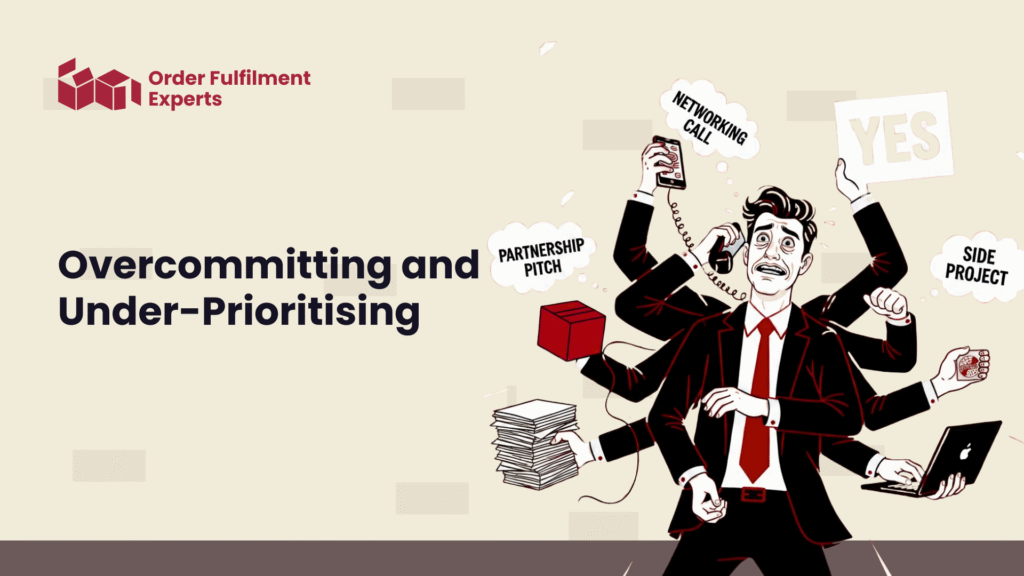
7. Overcommitting and Under-Prioritising
Founders often say yes to everything, networking calls, partnership pitches, side projects. Before you know it, your day is gone.
Why This Happens:
- Fear of missing opportunities.
- Lack of a clear prioritisation framework.
How to Fix It:
- Apply the Eisenhower Matrix (urgent vs. important tasks).
- Say no to activities that don’t align with core goals.
- Block deep work time for high-impact tasks only.
8. You Don’t Have a System for Scale
If your business still relies on you for every decision, you’re the bottleneck. That kills growth and drains your energy.
Why This Happens:
- No automation tools.
- No scalable processes.
How to Fix It:
- Automate order fulfilment, inventory tracking, and reporting.
- Partner with a 3PL provider like OFEX for end-to-end fulfilment support.
- Build systems-first thinking into your culture.

How to Implement a Founder’s Time Audit
Now that you know the traps, here’s how to run your own time audit for business owners:
- Track every task for 7 days. Use tools like Toggl or Clockify.
- Categorise tasks: High-impact vs. Low-impact.
- Eliminate, Delegate, Automate the low-impact tasks.
- Reinvest your time into strategy, growth, and leadership.
Scale Your Time, Scale Your Business
Your time is your most valuable asset. If you’re burning it on operational chaos, emails, and packing boxes, you’re capping your growth. The fastest way to reclaim your time? Partner with experts who handle the heavy lifting.
That’s where Order Fulfilment Experts (OFEX) comes in. We take care of storage, picking, packing, and shipping so you can focus on scaling your business and living the life you imagined when you became a founder.
Visit us today: https://www.orderfulfilmentexperts.co.uk/
Connect with us on social:
- Facebook: OFEX UK
- Instagram: @ofex_uk
- LinkedIn: Order Fulfilment Experts
Stop wasting time. Start building the business you deserve.
